This Isn't About Running
From the outside, people assume this is about running.
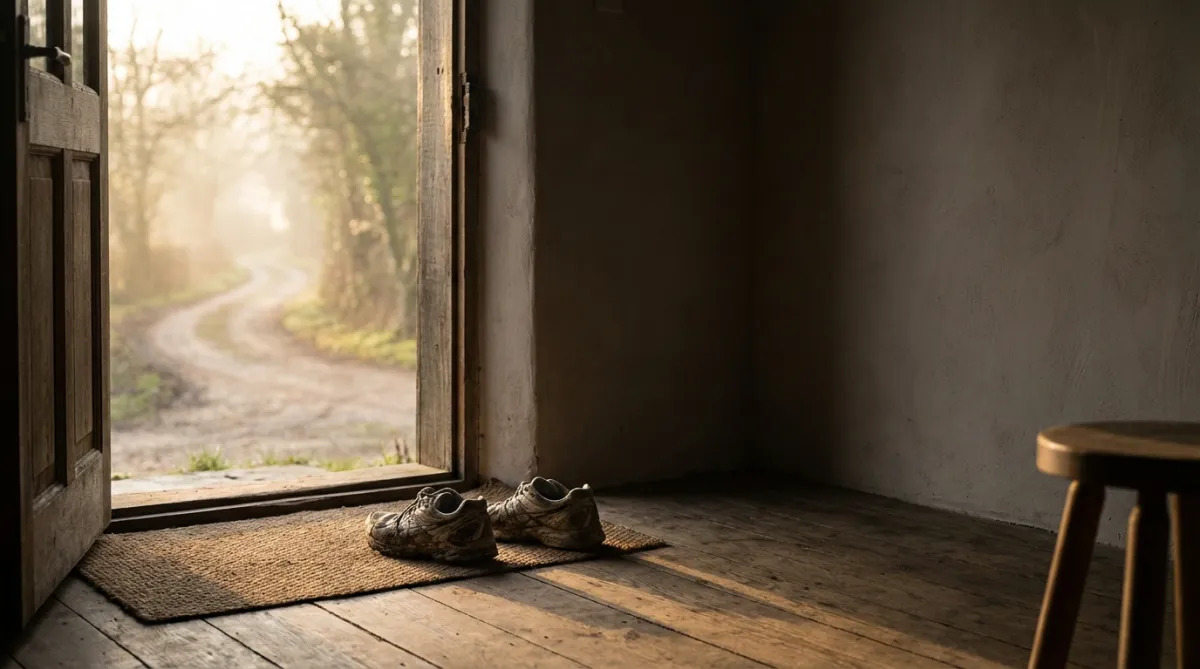
They see the shoes by the door. The routes mapped out on phones. The Sunday mornings where people gather in small groups in parking lots or near trailheads.
They see the weather posts. The occasional group photo. The quick updates after a run.
And it’s easy to assume that running is the point.
That the purpose is miles.
Distance.
Fitness.
Performance.
But that’s not really what’s happening here.
Running is just the doorway.
It’s the visible part of something much quieter.
The real work doesn’t happen on the trail.
It happens before that.
It happens in the moment before you decide to go.
Before your shoes are on.
Before anyone sees you.
That quiet moment, when you’re deciding whether today counts, that’s where this actually lives.
The Real Decision
The hardest part of most runs isn’t the distance.
It’s the decision.
There’s always a moment before you leave the house.
A pause.
A small conversation inside your mind.
Do I really need to go today?
Would it matter if I skipped just this once?
Is today important enough to show up?
It’s a simple question, but it shows up everywhere in life.
Not just before runs.
It appears before you speak up in a meeting.
Before you follow through on something you promised.
Before you take action on something that would be easier to delay.
Running just gives that moment a clear shape.
You either step through the hesitation.
Or you stay where you are.
And every time that moment appears, the decision matters a little more than it seems.
Movement Is the Medium, Not the Message
People sometimes assume that running itself is the special thing.
But movement is just the medium.
It’s the environment where something else can happen.
When people move together, running, walking, climbing, hiking, something interesting takes place.
The noise of everyday life fades a little.
Phones stay in pockets.
The pace of conversation slows down.
Breathing becomes louder than distractions.
And something simple happens.
People become more honest.
You can’t curate yourself as easily when you’re moving.
You can’t rehearse every sentence.
You can’t hide behind polished versions of yourself.
Movement simplifies things.
It strips away the extra layers.
What’s left is just people showing up as they are.
And that simplicity creates space for something real.
What Actually Gets Built
People often think running groups build endurance.
And yes, endurance improves over time.
But that’s not the most important thing that gets built.
The real thing that develops here is trust.
Trust that you’ll show up even when it’s inconvenient.
Trust that you’ll keep your word without needing applause or recognition.
Trust that you can be counted on.
At first, that trust exists between people.
You notice who shows up every week.
Who follows through.
Who stays consistent even when the conditions aren’t ideal.
But eventually something deeper happens.
That trust begins to exist within yourself.
You start to realize something important.
You’re someone who follows through.
Someone who does what they said they would do.
Not because it’s always exciting.
But because you decided to.
Why Repetition Matters
Trust doesn’t appear through big moments.
It grows through repetition.
Through small decisions made again and again.
Through showing up when the activity feels ordinary.
Especially when it feels ordinary.
Because ordinary moments reveal more about us than dramatic ones do.
It’s easy to commit to something when it feels exciting.
It’s easy to show up when everything is new and motivating.
But what about the days when nothing feels special?
When the weather is cold.
When you’re tired.
When it would be completely reasonable to stay home.
Those are the days when repetition becomes powerful.
Because repetition slowly builds reliability.
And reliability turns into something rare.
Dependability.
Why This Matters
Many people spend their lives waiting for something to feel meaningful before committing to it.
They wait for excitement.
For passion.
For a sense that the effort will clearly be worth it.
But meaning usually doesn’t arrive first.
Meaning shows up later.
After you’ve stayed long enough for something to become familiar.
After you’ve repeated the action enough times that it becomes part of your routine.
After you’ve moved through resistance enough times that it stops feeling personal.
You don’t always recognize the significance while it’s happening.
You only notice it later.
When you realize that something small has quietly become part of your life.
Running just happens to be a simple place to practice that process.
There are no disguises.
No shortcuts.
No audience required.
Just the decision to show up again.
The Real Point
If this ever becomes about pace, distance, or performance alone, then we’ve missed the bigger picture.
Those things can be interesting.
They can even be motivating.
But they aren’t the core of what this is about.
The real purpose is building a way of being.
A pattern of behavior that extends far beyond running.
It shapes how you handle discomfort.
How you keep promises.
How you respond when things are difficult.
How you show up in situations where no one is watching.
Those habits don’t stay on the trail.
They follow you everywhere.
Into work.
Into relationships.
Into the commitments you make with yourself.
The Habit That Remains
Every run eventually ends.
The miles finish.
The route loops back to the starting point.
People stretch, talk for a moment, then head home.
But the habit doesn’t end there.
The pattern continues.
Because the real practice wasn’t the running.
It was the decision.
The moment where you chose to show up.
That moment appears again and again in different forms throughout life.
And every time you step through it, you reinforce the same idea.
That showing up matters.
Even when it’s quiet.
Even when it feels ordinary.
Even when no one else notices.
Why This Was Never Just About Running
From the outside, it still looks like a running group.
People moving together.
Routes and shoes and Sunday mornings.
But the deeper reason people stay has very little to do with running itself.
They stay because something meaningful grows through the repetition.
A sense of reliability.
A sense of belonging.
A sense that they are capable of following through on what they started.
Running simply happens to be the doorway.
What gets built after you step through it, that’s the real work.
And that’s why this was never really about running at all.
